When Should a Website Stop Being a Website and Become a Web Application?

Most businesses start with a website. A few pages, a contact form, service information and perhaps a way for customers to make an inquiry. And that works until the business grows.

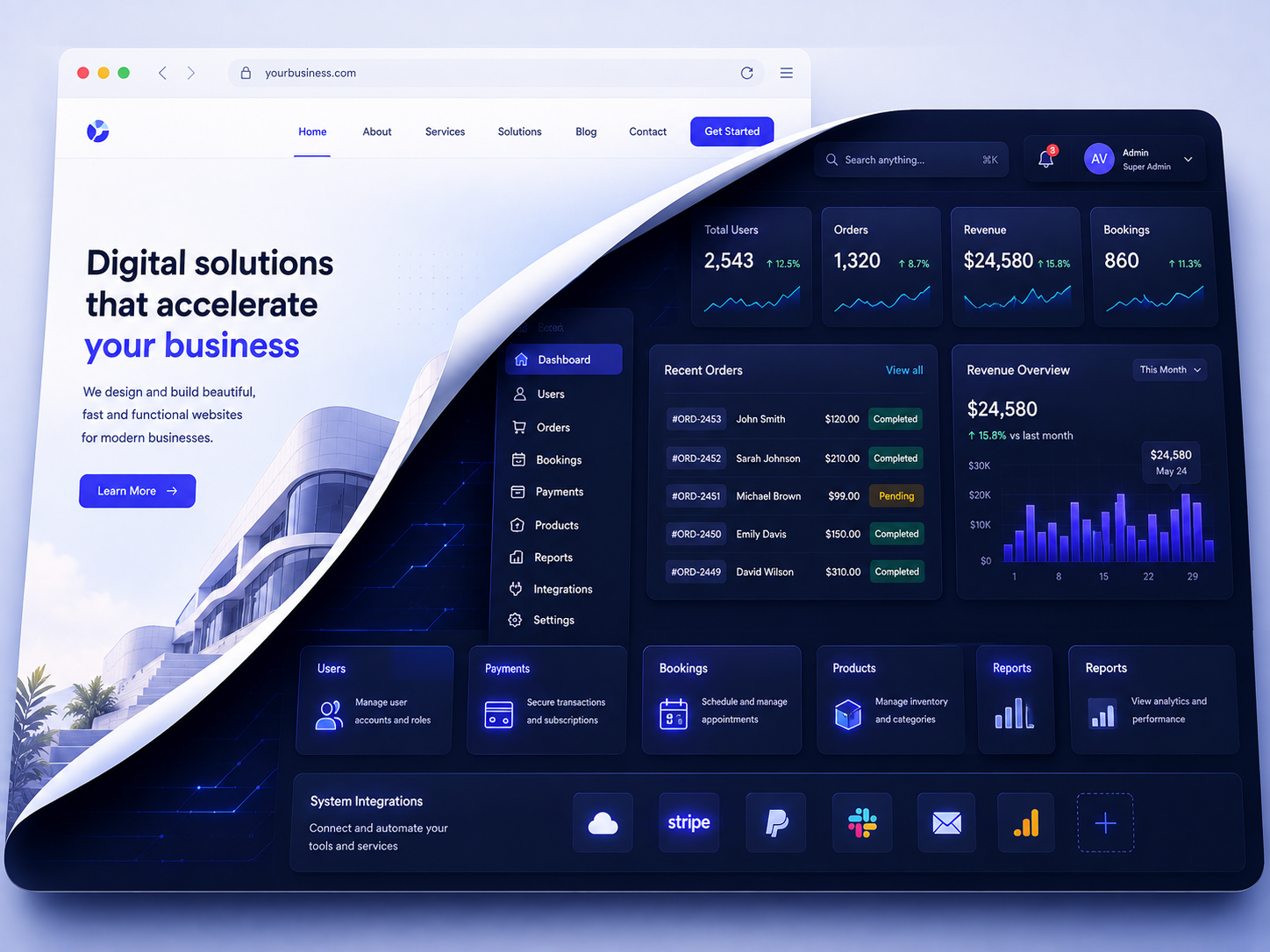
Customers want accounts. Employees need dashboards. Bookings need to be managed. Payments need to connect. Leads need to reach the CRM automatically. At some point, the website isn’t just showing information anymore.

It’s becoming part of how the business operates. That’s when an important question comes up:

Do we keep adding features to the website, or do we need a web application?

A Website Shows. A Web Application Does.

A traditional website is primarily designed to inform and convert.

It tells visitors:

  • Who you are
  • What you offer
  • Where you’re located
  • How to contact you

A web application goes further. It allows users and businesses to interact with data and processes.

Think:

  • Customer dashboards
  • Booking systems
  • Client portals
  • Order management
  • Employee systems
  • Reporting dashboards
  • Subscription platforms
  • Custom business tools

The difference isn’t the number of pages. It’s what happens behind those pages.

The Signs Your Website May Have Outgrown Itself

1. Your Team Is Doing Too Much Manually

A customer submits a form.

Someone copies it into a spreadsheet.

Another person updates the CRM.

Someone sends an email.

Another person creates an invoice.

If your team is constantly moving information between systems, the problem may no longer be the website.

It may be the workflow.

2. Customers Need Their Own Accounts

The moment customers need to log in and see:

  • Orders
  • Bookings
  • Payments
  • Documents
  • Account information

You’re moving beyond a simple website experience. You are building a system around the customer.

3. Your Website Needs to Make Decisions

A website can display: “Our consultation costs $100.”

An application can determine the price based on:

Customer type → Service → Location → Duration → Discount → Final price

The more your system needs to calculate, validate, check or route information, the closer you are to application-level functionality.

4.When a Website Starts Needing More Than a Website

It often starts with a small request.

A login, an order history, a payment option, or a simple admin panel. Over time, more functionality gets added, and the website starts handling more of the business process.

That’s not necessarily a problem. But once you need things like user roles, order management, payments, custom workflows or multiple system integrations, the project may be moving beyond a standard website.

So, Is WordPress Still the Right Choice?

It can be.

WordPress works well for many businesses, especially when the main requirement is managing content, products or standard website functionality.

When the requirements become more specific, there are other options too custom development, integrations, automation or a dedicated web application.

The important thing is to look at what the business needs today and where it is likely to go next, then choose the technology around that.
The Better Question to Ask

Instead of asking, “What feature should we add next?”, ask, “What are we currently doing manually that technology could handle better?” This shifts the focus from simply adding more features to finding ways to make the business process easier, faster, and more efficient.

That question can reveal opportunities for:

  • Automation
  • CRM integration
  • Payment integration
  • Customer portals
  • Custom dashboards
  • API integrations
  • Custom web applications

The Webster Solutions Perspective

At Webster Solutions, we don’t believe every business needs a complex application.

A simple website can be exactly the right solution.

But when a website starts managing customers, data, payments, workflows and internal processes, it may be time to rethink the architecture.

We work across WordPress, WooCommerce, custom web development, integrations and business-focused digital solutions, allowing us to recommend the approach based on the actual requirement rather than forcing every project into the same technology.

Because the goal isn’t to build something complicated. It’s to build the right system for your business.

👉 Ready to work with a team that thinks beyond the obvious and builds for what’s next?  Book a free strategy call with us – let’s talk about your next project!

administrator